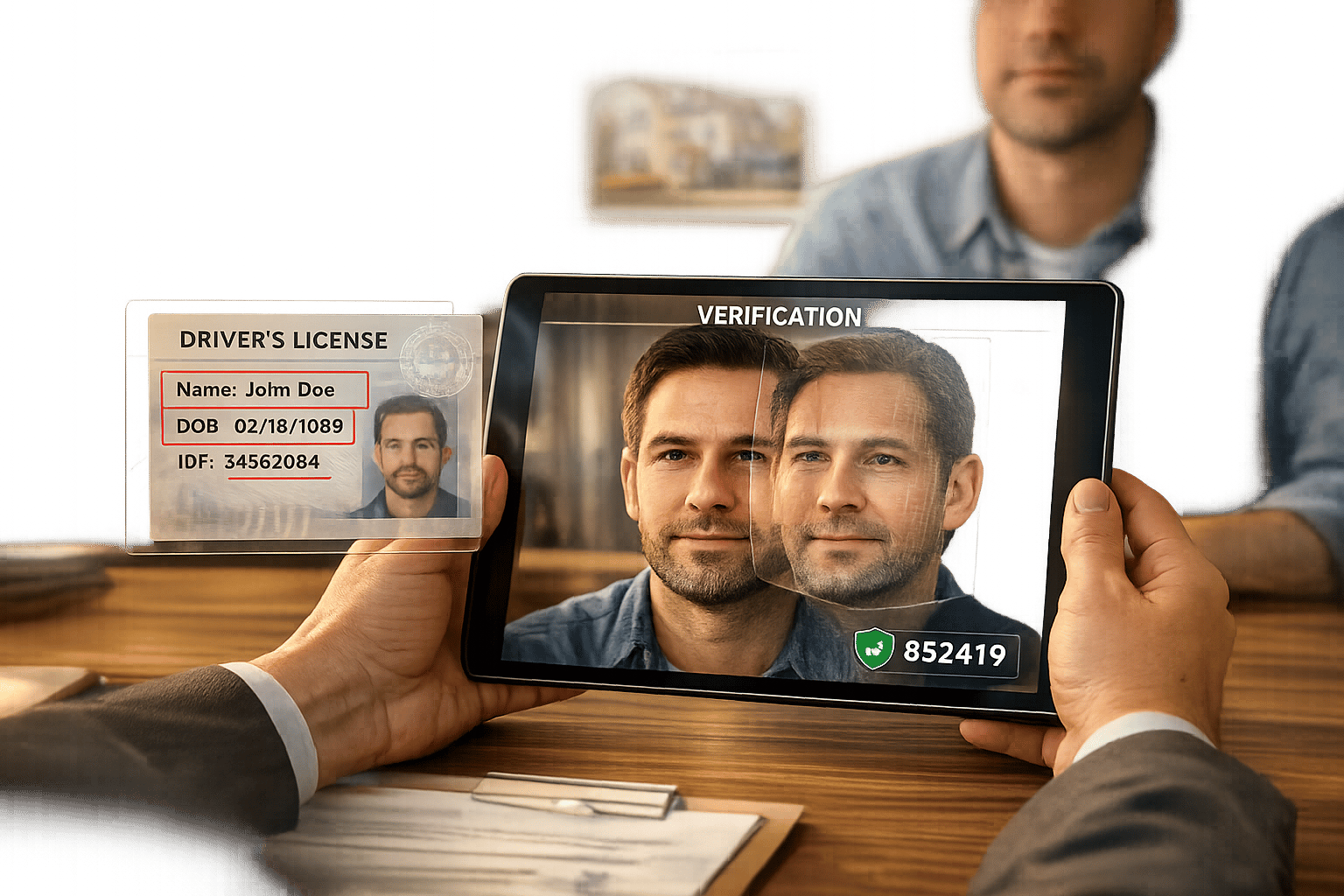
Cyberattacks in real estate are evolving, driven by AI tools that make scams more precise and harder to detect. Criminals are using techniques like deepfake impersonations, synthetic identities, and AI-generated phishing emails to target high-value transactions. In 2025, real estate fraud accounted for $275.1 million in damages, with over 12,000 complaints filed. The rise of remote transactions and digital tools has expanded vulnerabilities, making wire fraud and identity theft more common.
Key takeaways:
- AI-powered threats include deepfakes, forged documents, and sophisticated phishing.
- High-value transactions and digital platforms are prime targets.
- Losses in 2025: $3.04 billion from email compromise attacks alone.
- Prevention measures: Multi-factor authentication, identity verification, and AI-driven defense tools.
AI is not only a tool for attackers but also a solution for defense. Real estate professionals must combine advanced security measures with staff training and strict verification protocols to safeguard transactions.

AI-Driven Real Estate Cyber Attacks: 2025 Statistics and Impact
AI-Driven Cyber Attack Methods in Real Estate
Deepfake Impersonation in High-Value Transactions
Cybercriminals are now leveraging AI to create live video deepfakes during crucial moments in real estate deals. Using advanced voice cloning, they can mimic the voices of colleagues, clients, or even CEOs by extracting short audio samples from sources like voicemail messages or LinkedIn videos. Shockingly, basic deepfake profiles are available online for as little as $10, allowing fraudsters to quickly assemble convincing impersonations [3].
These attacks often target remote transactions, especially those involving out-of-state sellers or vacant land, where verifying identities in person is difficult. Deepfake-related scams have surged by 40% annually [5], with criminals shifting their focus from mass spam efforts to high-value, high-impact fraud. Beyond impersonation, AI also enables the creation of entirely fabricated identities, further complicating the security landscape for real estate professionals using integrated platforms.
Synthetic Identity Fraud and Property Exploitation
AI also plays a key role in creating synthetic identities – completely fabricated personas built from scratch. By scraping the internet, criminals can clone legitimate real estate practitioner bios and generate digital profiles that appear professional yet leave little to no historical footprint [6]. Fraudsters often monitor email threads for weeks, gathering context before deploying these synthetic identities to misdirect funds.
AI image tools are also being used to create deepfake property listings, complete with fabricated luxury finishes and scenic views. These fake listings lure buyers into paying deposits for properties that don’t exist. Transactions involving vacant land or properties owned by out-of-state sellers are particularly vulnerable, as in-person verification is often impractical. This exploitation of trust within the real estate industry amplifies the cybersecurity challenges faced by professionals.
AI-Forged Documents and Verification Bypass
AI has rendered many traditional fraud detection methods obsolete. Documents like settlement statements and wiring instructions, once rife with telltale signs of fraud, are now polished and contextually accurate – making them nearly impossible to distinguish from legitimate files. Cybercriminals often monitor email conversations for weeks, waiting for the perfect moment to insert forged wiring instructions just as a transaction nears completion [3].
Take the case of Raegan Bartlo in August 2023: she lost $255,000 intended as a down payment for a home in West Virginia after receiving a fraudulent email that appeared to come from her title company’s lawyer. The wiring instructions looked entirely legitimate, leading her to transfer the funds just two days before realizing the mistake [7]. Business email compromise targeting real estate wire transfers accounted for $3.04 billion in losses across 24,768 complaints in 2025 [4]. These examples highlight how advanced forged documents demand stricter verification measures in real estate transactions.
AI-Powered Phishing and Autonomous Malware
Phishing attacks have evolved far beyond generic spam emails. Today, they’re tailored with precise transaction details and mimic the tone and style of trusted contacts. Criminals use AI to scrape LinkedIn profiles, replicate voices from voicemail recordings, and monitor email exchanges over extended periods.
"In 2025, the biggest shift we saw was not necessarily brand-new fraud types, but more so criminals getting much better at timing, context and realism" [3].
A stark example occurred in October 2025, when a U.S. real estate firm was attacked using the Tuoni C2 malware framework. The malware was cleverly hidden in a BMP image and delivered through a social engineering scheme on Microsoft Teams, where the attacker posed as a trusted vendor. Operating entirely in memory, the malware bypassed traditional security defenses [1]. This level of sophistication shows how even verification steps like live video calls or phone confirmations are no longer foolproof, emphasizing the need for robust cybersecurity measures in real estate operations.
sbb-itb-99d029f
How to Protect Against AI-Driven Cyber Threats
Implementing Multi-Factor Authentication (MFA)
Multi-factor authentication (MFA) is a must-have – it’s your first line of defense against credential theft and account takeovers. By requiring users to verify their identity through two or more independent factors, MFA makes it much harder for attackers to access sensitive systems, like property management software or MLS platforms, even if passwords are compromised.
For high-stakes transactions, advanced verification methods go a step further. These include combining device signals, identity checks, and behavioral tracking to detect and block suspicious activity in real time. For example, real estate firms managing wire transfers should use callback protocols to verify changes using contact details established at the start of the deal – never from recent emails. As Tyler Adams, CEO of CertifID, points out:
"The companies that make wire verification mandatory – no matter the deal size or who’s involved – are the ones really stopping fraud" [3].
Biometric authentication, such as AI-enabled fingerprint or facial recognition, adds another layer of security for property transactions [2]. Considering that business email compromise accounted for $3.04 billion in losses across 24,768 complaints in 2025 [4], these extra measures are becoming essential.
Staff Training and Awareness Programs
Technical defenses are critical, but they’re only part of the equation. A well-trained and vigilant team is just as important. Rob Tennant, Deputy Chief Information Security Officer at Cotality, emphasizes:
"Culture eats strategy for breakfast" [2].
Without a workplace culture that prioritizes security, even the best technical systems can fail. That’s why training programs need to go beyond the basics.
Modern phishing simulations are key. These should reflect the latest threats, including AI-generated scams. Employees need to recognize highly personalized emails with flawless grammar, voice messages mimicking their CEO, or urgent wire transfer requests that seem perfectly timed. Tyler Adams highlights this evolving risk:
"Employees need to see what modern fraud really looks like – messaging that feels reasonable and familiar. Fraudsters won’t stop at a spoofed email" [3].
Training should also teach employees to identify AI-specific red flags, like slight inconsistencies in voice clones, unusual urgency in executive requests, or subtle shifts in tone or phrasing. Additionally, staff must understand how to preserve original metadata – saving full email files and attachments instead of screenshots – since this data is critical for forensic investigations [4].
Incident response drills are equally important. When employees know exactly what to do during a suspected fraud incident – who to contact, how to report it, and which accounts to freeze – reaction times improve dramatically, increasing the chances of recovering stolen funds.
Using AI for Cybersecurity Defense
Building on strong MFA practices and informed staff, AI-driven cybersecurity tools add another powerful layer of protection. These tools are designed to adapt to evolving threats, giving organizations a proactive edge. AI systems can process enormous amounts of data in real time, identifying subtle anomalies that might escape human notice – like unusual login behavior, minor shifts in network traffic, or fake content that appears legitimate at first glance [2]. Unlike manual processes, these tools operate 24/7, offering constant monitoring.
Automated incident response systems provide a critical advantage. When AI detects a threat, it can act instantly – isolating compromised systems, blocking malicious IPs, or alerting security teams – without waiting for human intervention [2]. Given that losses from cyber-enabled crimes exceeded $20.8 billion in 2025, every second saved can make a huge difference.
Security teams are also leveraging generative AI to test their defenses. By simulating realistic cyberattacks, they can uncover weaknesses before criminals exploit them and refine their security strategies [2]. This shift from reactive responses to proactive prevention is crucial as attackers continue to evolve their methods.
Platforms like CoreCast are already incorporating these advanced measures to protect real estate operations, ensuring a more secure environment for businesses and clients alike.
How CoreCast Helps Secure Real Estate Operations

Secure Data Integration and Analysis
CoreCast strengthens real estate operations by ensuring secure data management through rigorous integration protocols. By implementing strict access controls and verified user authentication, the platform effectively prevents unauthorized access and identity fraud – critical defenses against the AI-driven threats previously discussed. Data transmissions are encrypted, and secure backups are maintained to protect sensitive transaction details. Regular audits further enhance security by identifying and addressing vulnerabilities before they can be exploited. This proactive approach not only safeguards financial assets but also helps maintain brand reputation and client trust – essential pillars in real estate dealings. As Chelsea-Jade De Wet from Prop Data aptly puts it:
"Staying aware, staying cautious, and partnering with tech providers who prioritise trust is your best defence" [6].
Real-Time Monitoring and Reporting Features
CoreCast employs real-time monitoring systems to spot suspicious activities and irregularities as they happen, enabling swift responses to potential threats. By analyzing vast datasets continuously, the platform identifies unusual patterns, such as changes in network traffic or unexpected login attempts, which may signal a breach. Statistics highlight the importance of such systems: in 2024, organizations using AI-powered security detected and contained breaches 108 days faster, saving an average of $1.76 million per incident [8]. Without advanced monitoring, phishing-related breaches can take up to 206 days to detect and mitigate [8]. To address this, CoreCast’s automated defense mechanisms respond instantly – isolating compromised systems or blocking malicious IPs – eliminating delays that could occur if waiting for human intervention.
As threats evolve, CoreCast remains dedicated to enhancing its tools to meet the challenges of tomorrow.
Future AI-Driven Automation for Cybersecurity
Looking ahead, CoreCast plans to integrate advanced AI-driven automation to bridge security gaps and streamline the complexities of real estate operations. Future updates will focus on centralized AI analysis for real-time threat detection across networks and cloud environments, tackling sophisticated cyber threats like deepfake property listings, AI-generated scams, and voice cloning impersonation. With 66% of organizations anticipating a significant impact of AI on their cybersecurity by 2025, and 17% of cyberattacks expected to involve generative AI by 2027 [8], staying ahead is essential. As Chelsea-Jade De Wet from Prop Data notes:
"While fraudsters are getting smarter, so are the tools and teams working to stop them" [6].
This forward-thinking approach equips real estate professionals to proactively manage risks in an increasingly complex digital world.
Convention Replay: Cybersecurity & AI Scams Every Realtor Must Know
Conclusion
AI has fundamentally altered the landscape of cybercrime in real estate, leading to immense financial and reputational damage. Real estate fraud alone is projected to surpass $275 million in 2025 [4]. What used to be easily identifiable spam emails riddled with typos have now evolved into highly advanced threats, including deepfake impersonations and memory-based malware that evade detection.
Despite the sophistication of these methods, tried-and-true defenses remain effective when applied consistently. Measures like mandatory wire verification, swift incident reporting, and multi-layered identity checks have already recovered over $120 million in stolen funds [3]. By integrating AI-driven monitoring tools with human vigilance and stringent verification protocols, the industry can better combat these modern threats.
However, true security isn’t just about technology – it’s about fostering a culture of awareness and accountability. Rob Tennant, Deputy Chief Information Security Officer at Cotality, highlights this point:
"Culture eats strategy for breakfast… without a cultural shift toward proactive security measures that are accepted and endorsed across all levels, even the best strategies can falter" [2].
Real estate agents, title companies, and technology providers must work together to establish and adhere to robust verification standards, addressing vulnerabilities across every stage of the transaction process. A unified approach is essential to safeguarding the industry.
The stakes couldn’t be higher. As Tyler Adams, CEO and Co-founder of CertifID, explains:
"The smallest amounts are the most painful… for those buyers, it’s often all of their savings. That down payment might represent years of effort" [3].
With deepfake scams increasing by 40% annually [5], the need for immediate action is clear. Real estate professionals must shift from reactive responses to proactive strategies. This includes implementing thorough verification protocols before transactions begin, preserving digital evidence for forensic purposes, and promptly reporting incidents to activate the Financial Fraud Kill Chain [4]. By combining disciplined operational practices with advanced security tools, the real estate industry can better protect clients, businesses, and reputations in an increasingly hostile digital world.
FAQs
How can I verify wiring instructions safely?
To ensure the safe verification of wiring instructions, it’s important to rely on multiple security measures and trusted communication methods:
- Reach out directly: Always use a verified phone number or email address to contact the recipient – don’t rely on details provided in the original message.
- Confirm verbally: Before transferring any funds, call the recipient and confirm the wiring instructions in person or over the phone.
- Be cautious of AI-driven scams: Stay vigilant against tactics like deepfakes, voice cloning, or fraudulent emails that can mimic legitimate communications.
Additionally, document every step of the process to maintain a clear audit trail for future reference if needed.
What are quick signs of a deepfake or voice clone?
Quick ways to spot a deepfake or voice clone include watching for inconsistent facial features or movements, noticing an unnatural tone or rhythm in the voice, and identifying background or lighting that doesn’t match during video calls or recordings. These subtle irregularities can be key indicators of potential fraud.
What should I do immediately if I sent money to a scammer?
If you’ve fallen victim to a scam and sent money, it’s crucial to act fast to limit the damage. Start by contacting your bank or financial institution immediately to report the fraud. Ask them to stop or reverse the transaction if possible.
Next, file a report with local law enforcement and consumer protection agencies. This step not only helps in your case but also alerts authorities to potential patterns of fraud.
Finally, notify your payment provider or credit card company. They can flag your account for suspicious activity and take steps to protect you from further fraud. Acting quickly increases your chances of recovering lost funds and staying ahead of future scams.