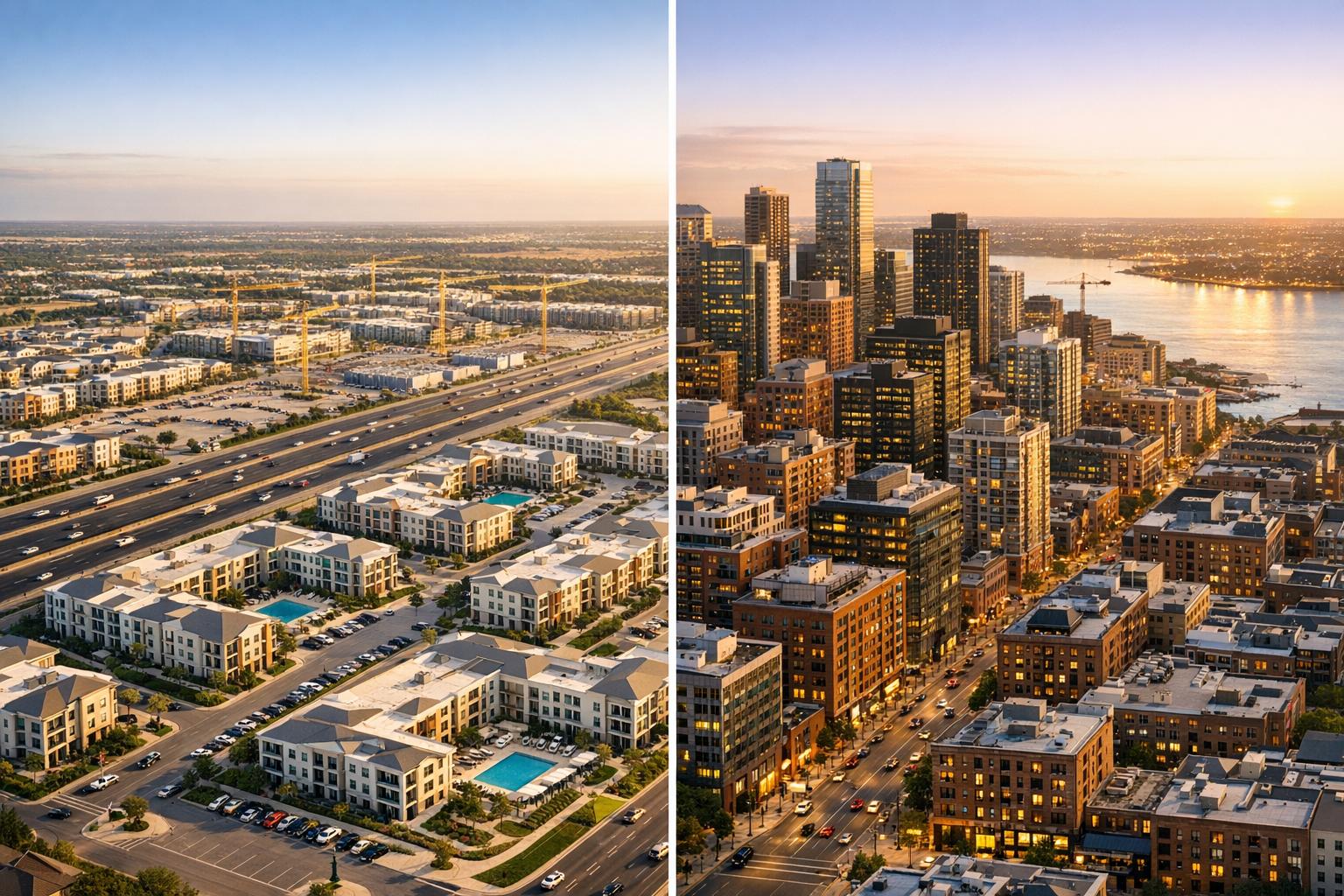
The multifamily housing market is facing a sharp slowdown in construction, with units under construction dropping by 53% since their 2023 peak. Rising costs for materials like steel and aluminum (due to 50% tariffs), along with higher operating expenses, have drastically reduced new project starts. Completions are forecast to fall from 372,000 units in 2026 to 327,000 in 2027 – nearly half of 2024’s peak of over 700,000 units.
Despite these supply challenges, rental demand remains strong. Homeownership is now $1,200 more expensive per month than renting, and only 12.7% of renters can afford a median-priced home. This affordability gap has kept many households renting longer, pushing net absorption to 770,000 units in 2025 – more than double 2024’s total.
However, vacancy rates have climbed to 7.4% nationally (the highest since 2017), with some regions like the Sun Belt experiencing oversupply and rent declines. In contrast, supply-constrained markets like New York and Chicago are seeing rent increases of 5–10%, driven by limited construction and strong demand.
Key takeaways:
- Multifamily construction has slowed sharply due to high costs and financial uncertainty.
- National vacancy rates reached 7.4% in early 2026, with oversupplied markets offering concessions to fill units.
- Rent growth is uneven: Sun Belt markets face declines, while supply-limited regions like the Northeast and Midwest show increases.
- Homeownership costs remain a major barrier, driving continued demand for rentals.
Understanding these trends is critical for navigating the evolving rental market and identifying opportunities in supply-constrained areas. Leveraging predictive analytics for multifamily properties can help investors anticipate these shifts before they materialize.
National Supply Trends and Rent Growth
The Drop in Multifamily Construction
The pace of multifamily construction has taken a sharp downturn. In 2022, multifamily starts peaked at 547,000 units, but by 2024, that number had plummeted to 355,000 units – a striking 35% drop. Looking ahead, projections suggest starts will inch back up to 392,000 units in 2026 and then shrink again to 367,000 units in 2027 [4]. This slowdown is also evident in the delivery numbers. After hitting a 38-year high with 608,000 completions in 2024, deliveries saw a steep 30% year-over-year decline by the first quarter of 2026 [8, 11]. These figures largely reflect the final wave of projects initiated during the pandemic, with new construction pipelines now significantly reduced.
Danushka Nanayakkara-Skillington, Assistant Vice President for Forecasting and Analysis at NAHB, sheds light on the situation:
"The multifamily market has slowed due to tighter financing, elevated construction costs, and the need for a precise real estate deal analysis tool and is moving towards a more constrained development environment" [4].
The combination of declining construction activity and shifting market cycles is also shaping occupancy trends.
How Vacancy Rates Affect Rents
As construction slows, vacancy rates have become a crucial factor in rent dynamics. Monitoring these shifts requires real-time CRE analytics to stay ahead of market volatility. Rising vacancy rates have shifted leverage toward renters. By February 2026, the national multifamily vacancy rate hit 7.4% – the highest since tracking began in 2017. Some reports even pegged first-quarter 2026 vacancy rates as high as 9.4% [8, 9, 11].
This uptick in vacancies has led to increased lease concessions. By the end of 2025, 23% of conventional properties were offering concessions – the highest rate in over ten years [3]. Rent growth has also slowed significantly. National asking rents rose by just 0.9% year-over-year by April 2026, while the median rent in January 2026 dropped by 1.4% to $1,353 [1, 11].
However, the market is showing signs of stabilization as construction activity continues to taper off. Sam Tenenbaum, Head of Multifamily Insights at Cushman & Wakefield, notes:
"The supply cycle is clearly shifting. Construction has slowed meaningfully, and demand is holding at levels consistent with historical norms. That combination is beginning to stabilize market conditions" [5].
sbb-itb-99d029f
Mike Zlotnik & Lon Welsh: The Future of Multifamily & The "Renter for Longer" Trend 🏢📈
Regional Differences in Supply and Rent Growth

Regional Multifamily Rent Growth and Supply Conditions 2026
Markets with Limited Supply and Rising Rents
The Northeast and Midwest are taking the lead in rent growth, driven by tight construction pipelines. New York stands out, with year-over-year rent growth hitting 5.7% to 5.8% in early 2026. Chicago followed with 3.8%, and Philadelphia saw increases ranging from 4% to 5% [7][8]. These markets only added 1–2% to their total housing stock through new construction, giving landlords more control over pricing [9].
A notable trend in the Midwest is the "boomerang migration", where former residents are returning to cities like Cincinnati. This has pushed rent growth in the area to 2–4% [10]. Apartment industry economist Jay Parsons highlighted Chicago’s strength, saying:
"Everyone’s always sleeping on Chicago, but Chicago’s been a really strong market" [10].
In April 2026, Argo Real Estate purchased a 164-unit waterfront property in Nyack, New York, for $45 million. The company plans to renovate and lease vacant units, aiming to take advantage of the high demand in the supply-constrained New York metro area [8]. Meanwhile, other regions are grappling with oversupply, leading to rent declines.
Sun Belt Markets with Excess Supply
The Sun Belt tells a very different story. Cities like Austin have seen the sharpest rent drops, ranging from -5.0% to -6.3% year-over-year, after adding a massive 8.6% to their multifamily housing stock through new construction [7][1]. Phoenix also experienced rent declines of 4.1% to 5.0% year-over-year [7][11]. These markets are part of a national backlog of 740,000 units in the lease-up phase, with 12 of the top 15 oversupplied markets located in the Sun Belt [2].
In these areas, landlords are focused on filling units rather than raising rents. By the first quarter of 2026, about 25.5% of apartments in these markets were offering concessions, with discounts averaging 7.2% off the asking rent [11]. Fayetteville and Fort Myers–Naples are under particularly heavy pressure, with the number of units under construction representing 16% and 13% of their existing inventory, respectively [2].
Regional Rent and Supply Data Comparison
Here’s a snapshot of how regions compare:
| Market Region | Rent Growth (YoY) | Supply Condition | Key Markets |
|---|---|---|---|
| Northeast | +5.7% to +13.0% | Limited supply; 1–2% stock additions | New York, Philadelphia |
| Midwest | +2.0% to +10.2% | Minimal new construction | Chicago, Cincinnati, Minneapolis |
| Sun Belt | -2.0% to -14.2% | Oversupply; 4–8.6% stock additions | Austin, Phoenix, Dallas, Orlando |
| West Coast | Mixed; +2.6% to +4.0% | Supply pipelines easing | San Francisco, San Jose, Seattle |
These differences highlight the impact of varying construction activity over the years. For instance, Dallas is set to deliver 28,800 units in 2026, while Phoenix plans for 19,900 units. In contrast, supply-restricted markets continue to benefit from limited development [12]. National vacancy rates ranged from 7.3% to 9.4% in early 2026, but regional disparities are stark. Atlanta, for example, hit a 14% vacancy rate, while tighter markets maintained much lower levels [1][6].
What’s Driving Demand Despite Supply Limits
New Households and Population Growth
The 25-34 age group is experiencing a surge in household formation, fueling a consistent demand for rental housing. In the first quarter of 2025, a record 138,000 units were absorbed as this demographic hit its peak [1]. Over the course of 2025, national net absorption climbed to approximately 770,000 units, more than double the total from 2024 [3].
Meanwhile, a sluggish single-family housing market is keeping renters in apartments longer. With ownership costs now more than twice the monthly rent, lease renewal rates remain high at approximately 55% [1][14].
"This barrier to homeownership will continue to favor rental housing demand, maintaining lease-renewal rates around 55 percent, above the long-term average." – Marcus & Millichap [14]
However, the 7.4% unemployment rate among 20–28-year-olds [1][14] raises concerns that could slightly temper this demand, requiring investors to perform scenario analysis for real estate portfolios. Even so, the combination of affordability challenges and demographic trends continues to support a strong rental market, especially as shifting work and lifestyle patterns play a role.
Affordability Issues and Work Location Changes
Return-to-office policies and growth in the AI sector are driving rental demand in tech-heavy coastal cities. This has led to notable rent increases: 6.3% in San Francisco, 5.7% in Virginia Beach, and 5.5% in Chicago [16][13]. Kim O’Brien from RealPage explained this trend, citing "return-to-office mandates, the rise in optimism surrounding artificial intelligence technology and waning supply volumes" [13].
The rising cost of homeownership continues to push more households toward renting. To afford the typical U.S. rent, a household now needs an annual income of about $76,000 – a 35% increase compared to pre-pandemic levels [16]. Additionally, average effective rents remain over $400 per month higher than pre-pandemic figures [3]. Even with these increases, renting is still far more affordable than buying a home for most Americans.
In high-income areas like San Francisco, rising wages are driving demand for premium rental units. Research from the San Francisco Fed highlights that "differences in affordability across areas may reflect differences in the growth and type of housing demand rather than different housing supply constraints" [15]. This indicates that renters in these markets are seeking upgraded or luxury units, which keeps prices elevated despite slower population growth.
Research Findings on Supply Shortages and Rent Growth
These findings provide a detailed look at how supply constraints influence rent trends across various markets, backed by data and statistical analysis. Investors can use these insights to plan property portfolio growth more effectively.
Population Growth Effects on Rents
Research across 491 markets highlights a clear connection between limited housing supply and rising rents. When a market’s housing supply grows by 10%, rent increases are reduced by 5% over a seven-year period [18]. This effect becomes even more significant when population growth is factored in. Population growth boosts the demand for additional housing units, while income growth tends to drive demand for better-quality housing or locations rather than an increase in the number of units [15].
For lower-cost housing, the numbers tell a compelling story. In the most affordable apartment segments (1‑ and 2‑star rentals), rent growth rises by 19.8 basis points for every 1% increase in annual employment growth within a market [17]. On the flip side, a 1% annual growth in apartment inventory reduces rent growth by 5.2 to 7.7 basis points [17]. Between 2017 and 2024, rents in the lowest-income ZIP codes climbed 10 percentage points higher than in the wealthiest areas [18]. This disparity highlights how supply shortages disproportionately affect affordable housing, placing a heavier burden on lower-income communities.
The "filtering effect" also plays a key role. This process occurs when new housing construction eases demand on older units. For every 100 market-rate homes built, about 70 units become available in lower-income neighborhoods. According to researchers from The Pew Charitable Trusts, restricting new construction "pushes up all rents, making it harder for low-income tenants to remain in their neighborhoods" [18].
These patterns underline the need to consider another important factor influencing multifamily housing demand—which can be tracked through real estate investment and asset management platforms—the chronic shortage of single-family homes.
Single-Family Housing Shortages and Multifamily Demand
Beyond the relationship between supply and rent growth, the lack of single-family homes is driving up demand for multifamily housing. With fewer single-family homes available, renters are staying in apartments much longer than in previous generations. By Q3 2024, the average monthly mortgage payment for newly originated loans was 35% higher than the average apartment rent [19]. This creates a significant financial barrier to homeownership. Additionally, nearly 80% of current homeowners have mortgage rates below 5% [19], leading to a "lock-in effect" that limits the number of single-family homes on the market. This shortage not only reduces housing options but also reinforces the upward pressure on multifamily rents.
Even as new multifamily units enter the market, demand remains strong. CBRE explains:
"The wide monthly premium between buying and renting a home will preserve existing renter demand in 2025. Many would‑be homebuyers will remain dissuaded by high home prices and mortgage rates" [19].
In cities like Austin and Los Angeles, the cost to buy a home is more than 2.5 times the average monthly rent [19]. This steep cost difference forces many potential homebuyers to continue renting, further bolstering multifamily demand.
2026 Rent Outlook and Investment Approaches
Rent Growth Projections for Low-Supply Markets
National rent growth is expected to hover at a modest 1.2% in 2026 [12]. However, markets with limited new construction – especially in parts of the Midwest, Northeast, and select West Coast areas – are set to outperform this average significantly. While Sun Belt markets face rent declines, these supply-constrained regions continue to show resilience [14][21].
Leading the pack, New York is projected to achieve 13.0% rent growth, followed by Chicago at 10.2% and Kansas City at 9.3% [12]. San Francisco, too, has shown strong performance, with 5.7% annual rent growth as of February 2026, marking the highest among major metros during that period [21]. Tech-heavy areas like San Jose, Seattle, and Orange County are also expected to lead rent growth in 2026, supported by tight supply pipelines [23].
This regional divide in performance is closely tied to supply dynamics. Multifamily completions are forecast to drop sharply, with only 260,000 to 300,000 units expected in 2026 – less than half of the 600,000 units delivered in 2024 [22][23]. This decline in new supply strengthens pricing power in markets with high barriers to development.
Meanwhile, the challenges of homeownership continue to boost demand for multifamily rentals. In 2026, the cost of buying a home is around 105% higher than renting, translating to an extra $1,200 per month for a median-priced home [14][20]. With a 3.4 million-unit shortage in single-family homes [20] and only 12.7% of renters able to afford a median-priced home [1], lease renewal rates remain high at 55% to 57% of all leasing activity [14][20]. This has shifted investor focus toward blended rent growth – an approach combining asking rents with renewal rents – since renewals are currently outpacing new leases in growth [20].
These trends highlight the importance of using advanced tools to identify and capitalize on emerging opportunities.
Using CoreCast for Market Analysis

As these rent growth patterns take shape, investors need reliable tools to navigate the evolving market. CoreCast’s intelligence platform offers a comprehensive solution for identifying opportunities in supply-constrained areas. By mapping properties and competitors, CoreCast helps pinpoint submarkets with limited forward supply and high barriers to entry, making it particularly useful for markets like Chicago, New York, and San Francisco, where limited new inventory supports stronger pricing power [12][21].
One standout feature of CoreCast is its ability to track blended rent growth – a combination of renewal and asking rents. This metric provides a more accurate picture of property performance, especially in 2026, when asking rents are declining in many markets, but renewal rents remain strong [20]. With real-time data tracking, investors can shift focus from oversupplied Sun Belt markets to regions like the Midwest, Pacific Northwest, and Mid-Atlantic, where supply-demand dynamics are healthier [22].
The platform also includes pipeline tracking, allowing users to monitor deals at various stages and access historical data for underwriting. This feature is particularly valuable for timing acquisitions to align with the projected supply bottom in 2027, when completions are expected to reach a low of around 327,000 units [1]. Additionally, CoreCast’s competitive mapping can help investors spot distressed opportunities, such as newly built properties in high-supply markets struggling to stabilize or Class C workforce housing facing operational issues [22]. With its ability to generate personalized reports for stakeholders, CoreCast simplifies the entire investment process, from initial analysis to deal execution.
Conclusion
As we look toward 2026, the rental market paints a mixed picture. Tight markets like Chicago, New York, and San Francisco are seeing strong rent increases, while oversupplied cities in the Sun Belt, such as Austin and Phoenix, face declining rents. Nationwide, the number of completed units is expected to fall to 372,000 in 2026 and drop further to 327,000 in 2027. At the same time, a lease-up backlog of 740,000 units suggests that recovery might take longer than many anticipate [1][2].
Even with solid absorption rates, the record-high vacancy rate of 7.4% highlights the importance of focusing on local market dynamics rather than relying on national averages [1][11]. For investors, this means that understanding regional supply-and-demand balances is essential to making sound decisions.
Demand for rental housing remains strong. With the monthly cost of homeownership exceeding renting by over $1,200 and only 12.7% of renters able to afford a median-priced home [1], the fundamentals supporting multifamily housing are still solid. However, the way this demand translates into rent growth has shifted. Markets with limited supply are leveraging pricing power, while oversupplied areas are competing for tenants with concessions averaging 7.2% [11].
These trends emphasize the need for data-driven decision-making. Tools like CoreCast’s integrated intelligence platform provide real-time insights into supply-constrained submarkets, competitive landscapes, and the lease-up backlog – key factors shaping local market performance. As we approach a projected recovery period in 2027–2028, understanding these supply dynamics will be critical for identifying winning investments and avoiding missed opportunities.
FAQs
When will the multifamily supply crunch start pushing rents up again?
The current challenges in multifamily housing supply are expected to push rents upward around 2027–2028. This trend stems from ongoing construction delays and a notable backlog in lease-ups, even though supply has increased recently and there have been attempts to stabilize rents. Industry experts predict that rent growth will slowly recover during this time, as supply issues continue to linger.
Why are vacancies rising even though renters can’t afford to buy homes?
Vacancies in the multifamily housing market are climbing, driven by an oversupply of new units. In 2024 alone, approximately 600,000 units are expected to hit the market – the largest number since 1986. This surge has pushed national vacancy rates to 9%, prompting landlords to prioritize keeping their properties occupied rather than increasing rents. Adding to the challenge, lower interest rates have made homeownership more accessible for some renters, reducing rental demand even as many others remain priced out of buying a home.
Which local metrics best predict rent growth in a specific submarket?
Key factors to watch when predicting rent growth in a submarket include employment trends, migration patterns, and affordability data. On a property level, metrics like lease terms and trade-out rates play a role. Broader regional indicators, such as construction starts and absorption rates, are also crucial. By leveraging AI, these elements are analyzed to deliver precise, hyper-local forecasts.